What Is a Reeded Glass Cabinet — Why Cafés and B&Bs Choose It for Display Storage | Pros & Cons Explained
What Is A Reeded Glass Cabinet
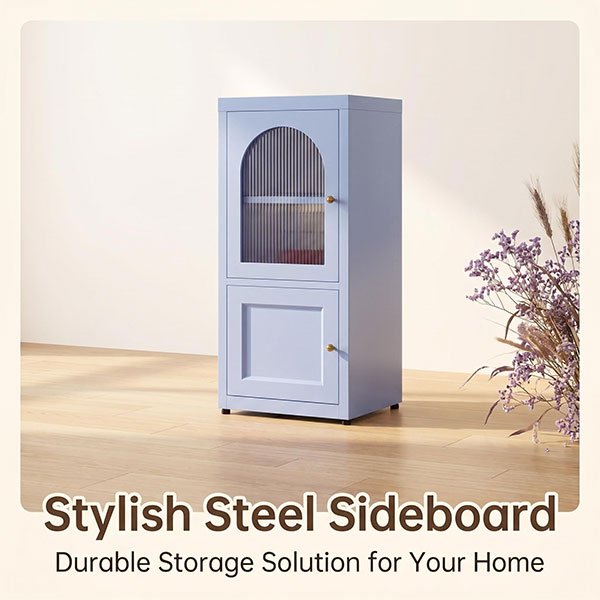
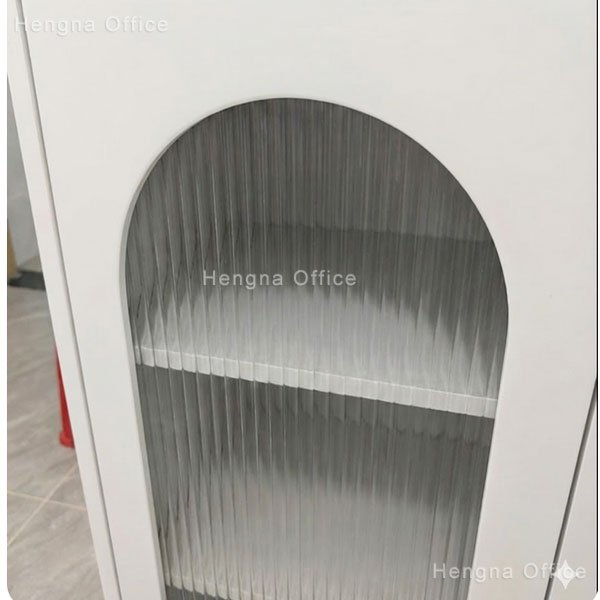
If you’ve sourced furniture before, you’ve probably seen this glass — vertical ridges running down the surface, items visible through it as soft silhouettes but details blurred out. In China it’s called cháng hóng bō li or “ribbed glass.” In English-speaking markets, the most common term is Fluted Glass. In the UK and Europe, Reeded Glass is more widely used. North America also uses Ribbed Glass.
Three names, one product: glass with vertical ridges pressed or rolled into the surface.
The ridges do one practical thing: they let light through, not details. From the outside, you can make out the general shape of what’s stored — a bottle, a row of cups, a stack of books — but you can’t see the specifics.
In a café, that means customers walk in and see the silhouette of wine bottles and glassware behind the bar cabinet. There’s atmosphere. But the backup stock, packaging boxes, receipt clutter behind the same door? Blurred out. The visual stays clean.
In a B&B guest room, a reeded glass cabinet door lets guests spot their belongings at a glance — suitcase, slippers, phone charger — without exposing every last item to anyone walking past.
Why Cafés and B&Bs Pick Reeded Glass Over Clear or Frosted
There are four main glass options for display cabinet doors:
| Glass Type | Transparency | Display Effect | Concealment | Texture | Cost |
|---|---|---|---|---|---|
| Clear Glass | Fully transparent | Everything visible | None | Basic | Lowest |
| Reeded Glass | Semi-transparent | Silhouettes visible, details blurred | Partial | Strong ridged texture | Mid |
| Frosted Glass | Semi-transparent, diffused | Completely obscured | Full coverage | Matte finish | Mid |
| Fluted Glass (wide rib) | Semi-transparent | Large shapes visible | Strong coverage | Decorative, wavy | Mid-high |
Clear glass causes obvious problems in commercial settings. Everything stored inside is on full display — backup stock in a café, cleaning supplies in a guest room. Once guests see that clutter, the experience drops. Clear glass cabinets require daily interior styling to look presentable. That’s real labor cost on top of the furniture cost.
Frosted glass fixes the concealment problem but kills the display function. Guests can’t tell what’s inside at all — so there’s no point having a “display” cabinet. Frosted glass works for bathroom doors and office partitions, not for furniture that needs to show off products.
Reeded glass sits between the two — neither fully transparent nor fully opaque. For cafés and B&Bs that need both display and storage in one piece of furniture, it’s the practical middle ground.
The Advantages — What Actually Matters in Commercial Use
Display and Storage in One Cabinet
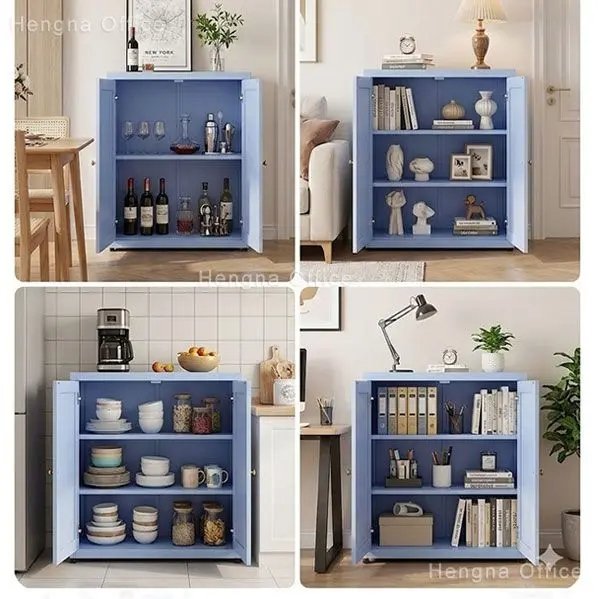
A café’s bar cabinet needs to showcase signature wines and branded glassware. But day-to-day operations also demand storage for backup stock, packaging materials, cleaning cloths in that same space. Clear glass makes it look messy. Frosted glass hides everything. Reeded glass does both: the upper section displays what matters, the lower section hides what doesn’t.
Less Daily Styling Work
The problem with clear glass isn’t just “people see your clutter.” It’s fingerprints, water marks, and dust — all highly visible under café lighting. The vertical ridges on reeded glass naturally mask these marks. Daily fingerprints and water spots don’t stand out the way they do on a flat glass surface. Cleaning frequency drops from twice a day to once.
The Ridges Are the Decoration
A cabinet with reeded glass door panels looks intentional even when empty. The ridges catch natural light and spot fixtures differently throughout the day, creating subtle light-and-shadow shifts that add depth to the space. Many interior designers specify reeded glass not because it’s trendy, but because it eliminates the need (and budget) for separate decorative elements.
One Cabinet, Two Functions — Budget Stretches Further
“Should we buy a display cabinet or a storage cabinet?” This is a common debate in café and B&B openings. Display cabinets look great but cost more and serve one function. Storage cabinets are practical but don’t add visual value. A reeded glass cabinet does both — show products up top, stash supplies below. One piece of furniture, two jobs, and less floor space consumed.
The Drawbacks
Labels and Fine Details Get Blurred
This is the inherent trade-off of semi-transparent glass. If you need customers to read product labels through the door — craft beer bottle labels, specialty coffee origin details, price tags — reeded glass will blur them. In that case, clear glass is the better choice.
Ridges Only Run Vertical
The texture direction is fixed. If your design calls for horizontal ridges or custom patterns, this won’t work. That said, over 90% of commercial demand is for vertical ridges, so this rarely comes up outside of custom projects.
Cleaning Direction Matters
You can’t wipe in any direction. Clean along the vertical ridges, top to bottom. Wiping crosswise leaves moisture and dust trapped in the groove channels. It’s not a major issue — just something to mention to your cleaning staff.
Style Doesn’t Fit Every Interior
Reeded glass reads as modern, Nordic, or light industrial. If your café or B&B leans toward复古 vintage, Chinese traditional, or rustic farmhouse aesthetics, this glass will look out of place.
Reeded Glass vs Fluted Glass — Same Thing?
Often used interchangeably, but the texture is different:
| Feature | Reeded Glass (Fine Ribs) | Fluted Glass (Wide Ribs) |
|---|---|---|
| Ridge Pattern | Fine, closely spaced, uniform | Wide, widely spaced, wavy |
| Visual Effect | Refined, precise | Bold, decorative |
| Concealment Level | Medium | High |
| Best For | Cafés, boutiques, modern commercial | Wabi-sabi, Japanese, Nordic residential |
| Price | Similar range | Similar range |
Think of it this way: reeded glass = “fine pinstripes,” fluted glass = “wide stripes.” Similar function, different personality. For commercial sourcing, cafés tend toward reeded glass for its precision feel. B&B guest rooms work with either — depends on the interior design direction.
Where Reeded Glass Cabinets Work Well
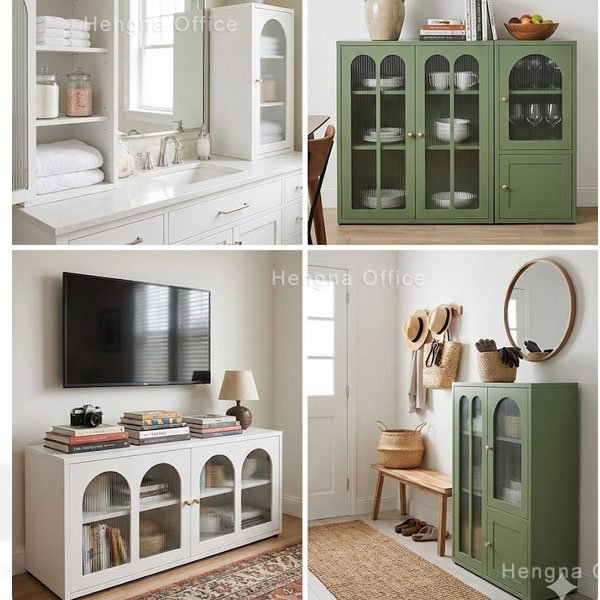
- Café bar and display cabinets — wines, glassware, branded merchandise. Semi-transparency creates ambiance without exposing back-of-house clutter.
- B&B guest room sideboards — visible storage for guests’ belongings, hidden storage for linens and supplies.
- Boutique retail — jewelry, home fragrance, stationery displays where the glass texture adds perceived value.
- Restaurant front-of-house — tableware and condiment storage visible to diners without looking disorganized.
- Co-working spaces — communal pantry cabinets where function and aesthetics both matter.
Where to Avoid It
- Product displays where customers need to read labels through the glass (craft beer bars, wine cellars)
- Vintage, Chinese traditional, or rustic interior schemes
- Pure utility storage with no display requirement (solid doors are cheaper)
Cost Comparison: Reeded Glass vs Clear Glass Cabinets
| Factor | Reeded Glass Cabinet | Clear Glass Cabinet |
|---|---|---|
| Unit Cost | Mid-range | Slightly lower |
| Daily Display Maintenance | Low (ridges mask clutter) | High (interior must be styled daily) |
| Cleaning Frequency | Once per day | Twice per day or more |
| Atmosphere Contribution | Noticeable | Minimal |
| Functional Coverage | Display + storage | Display only (or storage only) |
| 2-Year Total Cost | Lower (labor savings) | Higher (ongoing styling and cleaning labor) |
Clear glass cabinets have a lower purchase price. But the extra time spent each day restyling interiors and wiping fingerprints adds up. Anyone who’s operated more than one location has done this calculation — the reeded glass option usually wins on total cost within the first year.
If your café or B&B is evaluating display storage options and wants to see specific product specs and pricing, please contact us for more details.