In the professional world of curation and exhibition, space is the most valuable commodity. Whether you are managing a commercial showroom or a high-end private collection, the efficiency with which you utilize the internal volume of a showcase directly affects the aesthetic and economic value of the display. The impact of adjustable layer heights is often underestimated, but from a structural engineering and spatial design perspective, it is the cornerstone of maximizing display space for varied collections.
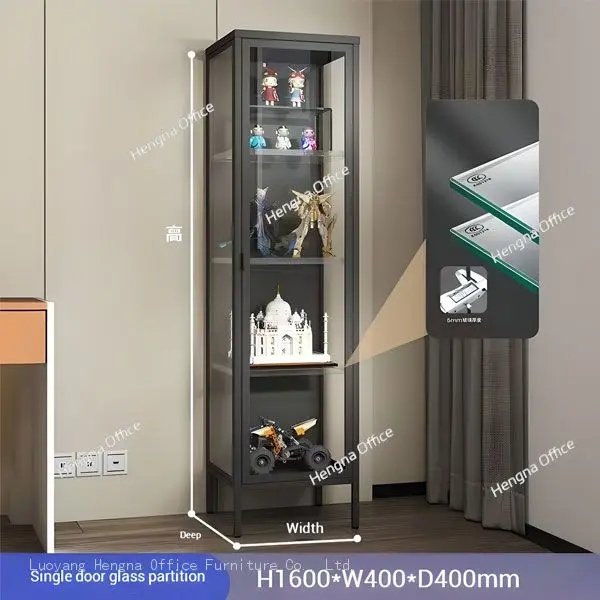
For collectors of 1:8 scale car models, high-end action figures, or complex LEGO Technic sets, the primary challenge is the lack of uniformity. A static, fixed-shelf cabinet creates “spatial waste”—the empty air above a shorter item that cannot be used. A professional figure display cabinet must solve this through a sturdy, adjustable shelving system.
This guide is for collectors, showroom managers, and procurement teams planning a cabinet around mixed-scale collections. It explains how shelf tracks are engineered, what to ask about the load figures, and how to plan the interior layout before the glass goes in — with the numbers in writing.
1. The Engineering of Volumetric Efficiency
Volumetric efficiency refers to the ratio of utilized space versus total available space. In a thickened column display cabinet, the internal volume is a fixed asset. If you place a row of 1:18 models on a shelf designed for 1:8 models, you are effectively “wasting” over 40% of the vertical volume.
Adjustable layer heights allow for “Spatial Arbitrage.” By moving the 8mm tempered glass shelves to match the exact height of the exhibits (plus a small safety clearance), you can often fit an entire extra layer of display into the same cabinet height. This is particularly critical in B2B industrial display gallery settings where floor space is expensive and every centimeter of vertical space must be optimized.
The clearance matters as much as the height: leave 2–3cm above each item for a hand to reach in and lift — a shelf tuned flush looks perfect until someone knocks a figure trying to grasp it. The arithmetic is simple: item height + clearance = track increment to choose.
2. Structural Integrity of the Adjustment Mechanism
A common concern for B2B buyers is whether a “flexible” shelf can handle the same load as a fixed one. This is where the heavy duty cold rolled steel construction becomes vital. In our HN-series, the adjustment is not handled by flimsy plastic clips. Instead, we utilize a reinforced track system integrated into the 46mm thickened columns.
The load-bearing glass shelves are supported by steel brackets that lock into precision-cut slots. This ensures that the 8mm tempered glass remains perfectly horizontal under heavy loads (up to 40kg per shelf), regardless of which height increment is selected. This stability is the hallmark of a museum-grade stability system.
Two checks separate a real track system from a decorative one: the slots should be punched or laser-cut into the column itself — not glued to it — and each bracket should seat with a mechanical stop rather than a friction fit. Ask for the bracket cross-section; a real steel bracket shows its thickness.

3. Comparative Analysis: Fixed vs. Adjustable Vertical Systems
| Performance Metric | Fixed Shelving System | HENGNA Adjustable Height System |
| Vertical Dead Space | High (Up to 50% waste) | Minimal (Optimized to exhibit height) |
| Collection Flexibility | Low (Requires specific sizes) | High (Adapts to varied scales) |
| Aesthetic Symmetry | Fixed (Often look sparse) | Dynamic (Customizable visual balance) |
| Weight Distribution | Static | Variable (Optimizable for frame load) |
| Future Adaptability | Poor (Forces new purchases) | Excellent (Grows with the collection) |
The future-adaptability row is where the real money hides: a fixed-shelf cabinet is re-bought when the collection changes scale, while an adjustable one reconfigures in an afternoon. When a quotation separates the two systems by a small margin, price the change-over instead of the delivery.

4. Visual Psychology and Lighting Alignment
Displaying a varied collection is an art form. Adjustable layer heights give the curator the power to create a “Visual Anchor.” For example, placing a large, complex piece at eye level and tightly packing smaller items below creates a sense of professional organization.
Furthermore, this flexibility interacts directly with our Breathing LED system. When you adjust the shelf height, you also change the light’s angle of incidence. In a cold rolled steel display case, the lighting is often integrated into the frame or the shelves. Being able to move the shelf means you can ensure the light “washes” over the most important details of your action figure collection without being blocked by the shelf above.
One layout habit separates amateur shelves from curated ones: the eye-level shelf is the anchor — put the hero piece there and build symmetry around it, rather than distributing the best items evenly. Adjustable heights make this habit possible in the first place.
5. Long-term ROI and Sustainability
For a China factory direct purchaser, sustainability is often about the “Lifecycle of Utility.” A cabinet with fixed shelves has a high probability of being replaced when the collection changes scale. An adjustable professional figure display cabinet remains useful for decades. Whether you switch from collecting watches to collecting helmets, the cabinet adapts. This longevity is a key selling point for OEM/ODM supported projects where the furniture must serve multiple generations of inventory.
For retail projects, the same logic applies across fit-outs: the cabinet moves to the next store, the next season, or the next display theme — the adjustable interior travels with it, which is why project buyers specify adjustable as standard.
6. Protecting Varied Collections from Environmental Factors
When layers are tightly packed through height adjustment, air circulation must still be maintained. The moisture-resistant base and the precise fit of the 3C tempered glass doors in our thickened column display cabinet ensure that even with high-density storage, the internal environment remains stable. The rigidity provided by the 46mm columns ensures that no matter how many layers you add, the cabinet will not sway or vibrate.
Dense layouts still need air movement: keep a finger-width gap between stacked items and avoid pushing the back wall flat against every piece. The moisture-resistant base and sealed glass do the rest — the internal climate stays steady even when the shelves are packed tight.

7. Frequently Asked Questions (FAQ)
Q1: How many adjustment increments are available in the HN-series?
Our thickened column display cabinet features precision-punched tracks every 25mm to 50mm. This high granularity allows you to fit the 8mm tempered glass almost flush with the top of your items, effectively eliminating wasted vertical space.
Q2: Will the 8mm glass shelves slide or vibrate if they aren’t bolted down?
No. Our adjustable system uses heavy-duty steel brackets with non-slip silicone buffers. When the load-bearing glass shelves are placed on these brackets, the weight of the glass and the collection creates a secure, vibration-dampened seat within the cold rolled steel display case.
Q3: Is it difficult to adjust the heights once the cabinet is assembled?
The system is designed for ease of use. While the 8mm tempered glass is heavy, the brackets can be moved without tools. For safety, we recommend two people handle the adjustment to ensure the shelf remains level while being repositioned between the 46mm thickened columns.
Conclusion
The impact of adjustable layer heights goes far beyond simple convenience. It is a fundamental tool for maximizing display space for varied collections. By choosing a heavy duty cold rolled steel cabinet that prioritizes vertical flexibility, you are investing in a system that maximizes every cubic centimeter of your display. In the world of high-end curation, flexibility is the ultimate form of stability.
Related reading: the beginner’s guide to metal display cases covers case types and terms; the 46mm column structure guide explains the frame behind the tracks; and the glass display cabinet cost guide explains what moves a factory quote.
Send your collection mix and item heights to Ms. Ivy Zhang — ivy.zhang@atoolcabinet.com or WhatsApp +86 135 2691 8367. Luoyang Hengna Office Furniture Co., Ltd. — 9 years of industry experience, CE certified production line, direct supply to trade buyers worldwide. The quotation comes back with the track spacing, glass thickness, and shelf load in writing — the three lines that decide how much of your collection actually fits.