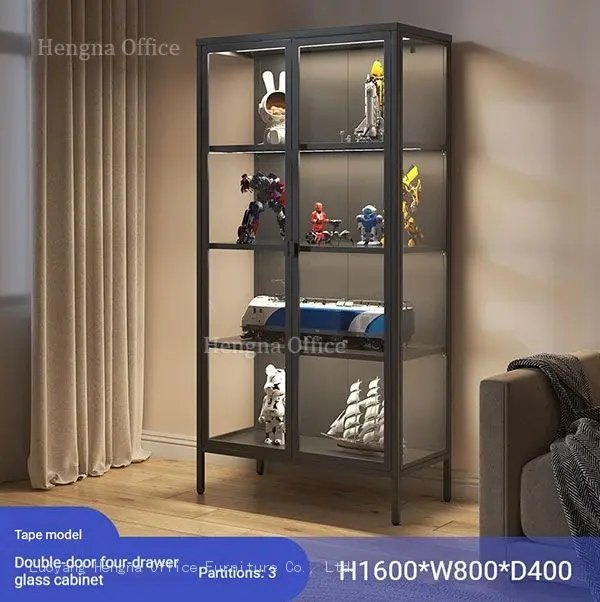
From Factory to Installation: How Many Quality Control Steps Does a Display Cabinet Really Need?
Hello everyone, this is Ivy. Welcome to a new edition of our blog series.
No further introduction—today’s topic is:
From factory production to on-site installation, how many quality control steps does a display cabinet really need?
When purchasing a display cabinet for retail, exhibition, or home collection use, many first-time buyers focus on appearance, size, and price. However, in my experience, most problems with display cabinets do not come from design concepts or product drawings. They come from missing or simplified quality control processes. These issues often appear months after installation—when adjustment or replacement is already expensive
In this article, I’ll walk you through the complete quality control journey of a professional display cabinet, explain what each step is meant to prevent, and help newcomers understand how to evaluate suppliers beyond appearance and price.
Why Quality Control Is Critical in Display Cabinet Manufacturing
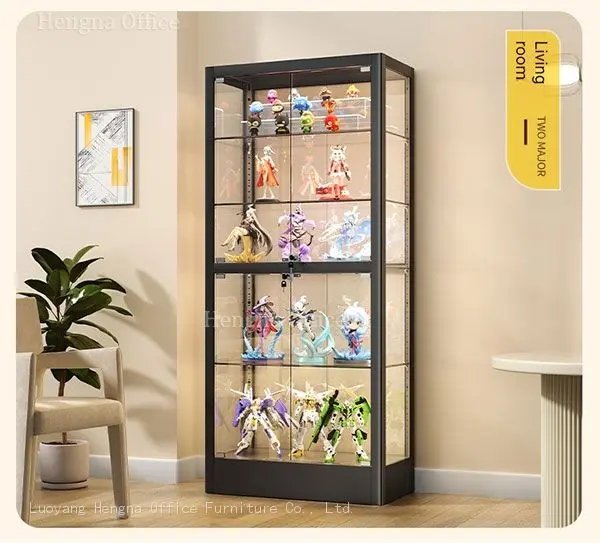
From an industry perspective, a display cabinet is not just furniture. It is a combination of:
- A load-bearing structure (supporting trophies, collectibles, products)
- A protective enclosure (glass safety, dust control)
- A long-term installation (expected to remain stable for years)
I’ve seen cabinets that looked perfect on delivery but developed issues later:
- Doors becoming misaligned
- Shelves bending under weight
- Coating corrosion in humid environments
- LED systems failing prematurely
All of these issues trace back to insufficient or poorly executed quality control.
How Many QC Steps Are Reasonable?
In a professional factory, a display cabinet typically passes through 8 to 12 key quality control checkpoints, depending on structure complexity and whether lighting or electronic components are involved.
Below is a simplified overview based on standard industry practice.
Table 1: Typical Quality Control Stages for Display Cabinets
| QC Stage | What Is Checked | Industry Term (Explanation) |
|---|---|---|
| Raw Material Inspection | Steel, glass, hardware | Incoming Quality Control (IQC – inspection before production) |
| Sheet Metal Processing | Cutting accuracy | Tolerance Control (allowed dimensional deviation) |
| Welding Inspection | Structural joints | Weld Penetration (depth of weld fusion) |
| Surface Treatment | Coating quality | Adhesion Test (coating bond strength) |
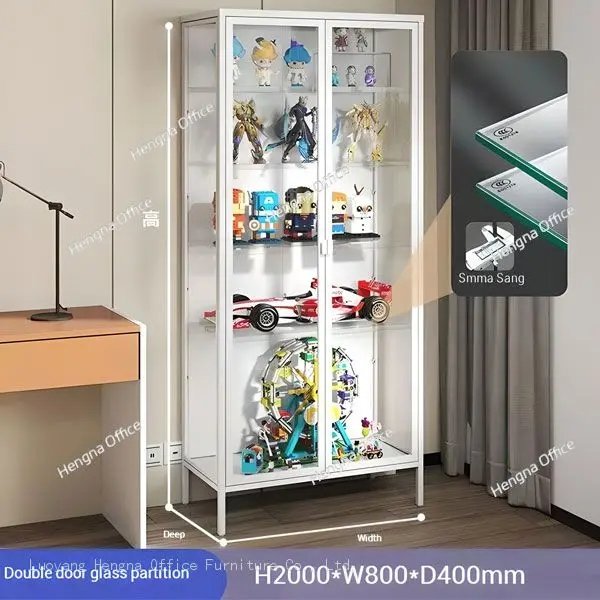
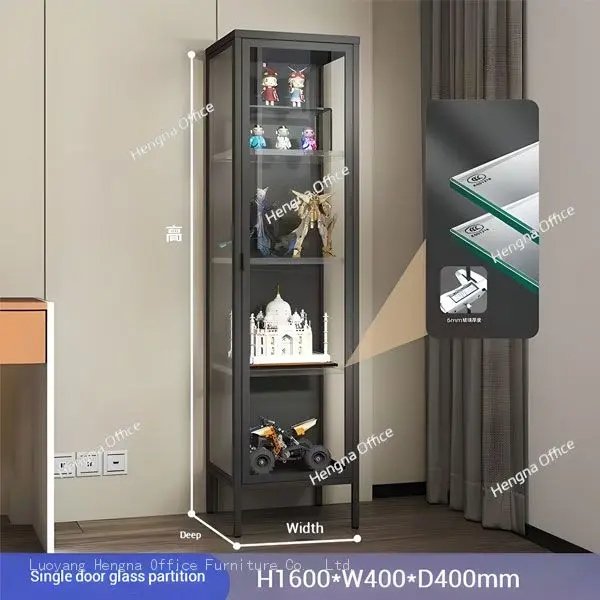
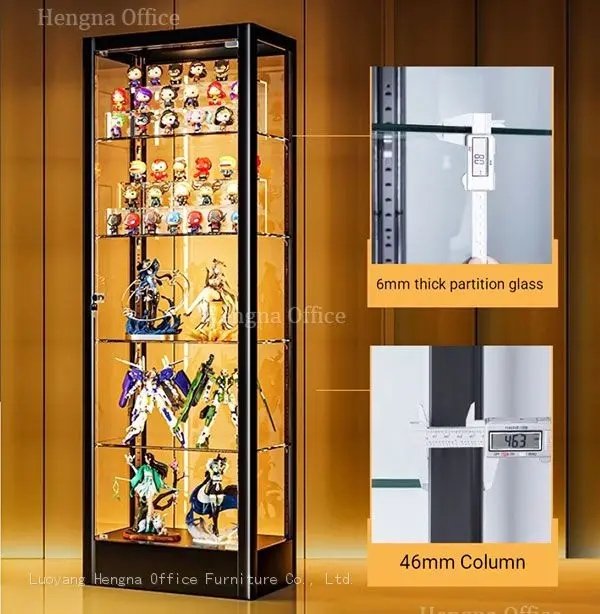
| Glass Processing | Safety & clarity | Tempered Glass Certification |
| Assembly Fit | Door & shelf alignment | Mechanical Fit-Up |
| Load Testing | Shelf strength | Static Load Test |
| Electrical Testing | LED & wiring | Dielectric Test (insulation safety) |
| Final Appearance | Finish & gaps | Final Quality Control (FQC) |
| Packaging | Transport safety | Drop / Vibration Simulation |
Step-by-Step: What Each QC Stage Actually Prevents
1. Raw Material Inspection (IQC)
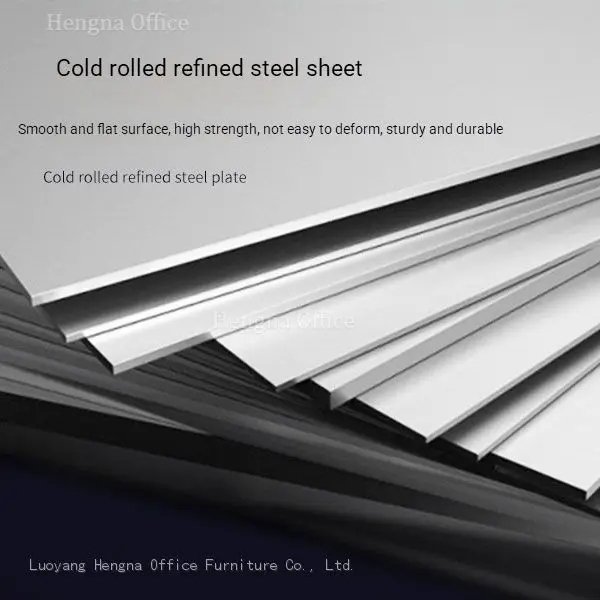
From my experience, this is where quality truly begins.
At this stage, factories inspect:
- Cold-rolled steel thickness (ensures structural strength)
- Glass type and grade (tempered vs. ordinary glass)
- Hardware quality (locks, hinges, LED drivers)
Cold-rolled steel = steel processed at room temperature for higher strength and flatness
Skipping IQC often leads to inconsistent quality within the same order batch.
2. Sheet Metal Cutting & Tolerance Control
Laser cutting or CNC punching is commonly used. QC focuses on:
- Dimensional accuracy
- Flatness of panels
- Edge smoothness
Tolerance = the acceptable deviation from a specified dimension
If tolerance is not controlled, later problems such as uneven door gaps or unstable shelves are almost unavoidable.
3. Welding Quality Inspection
Welding determines whether a cabinet remains stable over time.
Inspectors check:
- Weld continuity
- Penetration depth
- Absence of cracks or pores
Weld penetration = how deeply the weld fuses into the base metal
In my experience, weak welds may not fail immediately—but they do fail under long-term load.
4. Surface Treatment & Coating Quality
Most steel display cabinets use epoxy powder coating.
QC includes:
- Coating thickness measurement
- Adhesion testing
- Corrosion resistance checks
Epoxy powder coating = a dry coating process that improves durability and corrosion resistance
Poor coating quality leads to rust, peeling, and visible aging.
5. Glass Processing & Safety Inspection
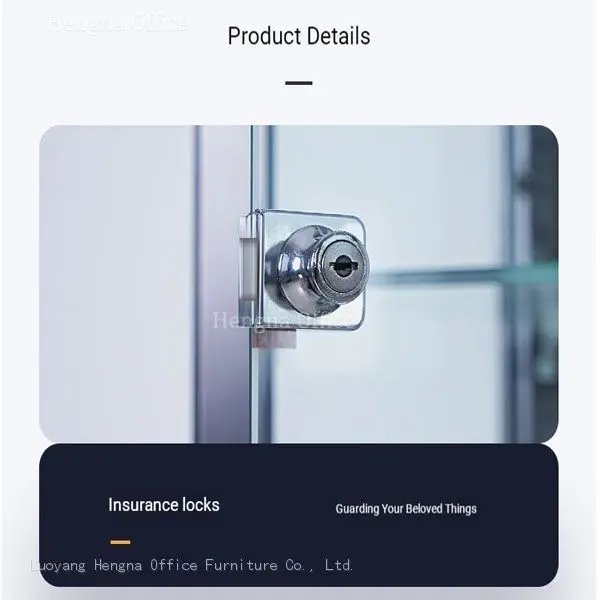
Glass doors usually undergo:
- Thickness verification
- Edge polishing checks
- Impact resistance testing
Tempered glass = safety glass strengthened by heat treatment; breaks into blunt fragments
From a safety standpoint, this step is non-negotiable—especially for public or family environments.
6. Assembly Fit & Mechanical Alignment
Once assembled, cabinets are inspected for:
- Door opening smoothness
- Shelf level accuracy
- Lock engagement reliability
Mechanical fit-up = how accurately components align during assembly
This step determines daily user experience.
7. Load-Bearing & Stability Testing
Shelves are tested using:
- Static load tests (weight applied over time)
- Structural deformation checks
Static load test = applying weight without movement to simulate long-term use
This is critical for trophy cabinets, collectors cabinets, and retail displays.
8. Electrical Safety Testing (For LED Cabinets)
When lighting is included, QC covers:
- Voltage stability
- Insulation resistance
- Sensor response accuracy
Dielectric test = verifies electrical insulation safety
This step reduces fire risk and extends LED lifespan.
9. Final Visual Inspection (FQC)
Before packaging, inspectors review:
- Surface scratches
- Glass clarity
- Door alignment
- Overall finish consistency
Final Quality Control (FQC) = last inspection before shipment
This ensures the cabinet meets both functional and visual standards.
10. Packaging & Transport Protection
Finally, cabinets are checked for:
- Foam and corner protection placement
- Carton strength
- Drop or vibration resistance
In my experience, good packaging prevents many disputes after delivery.
Installation-Level Checks: Often Overlooked
Even with strict factory QC, I always advise customers to perform post-installation checks, such as:
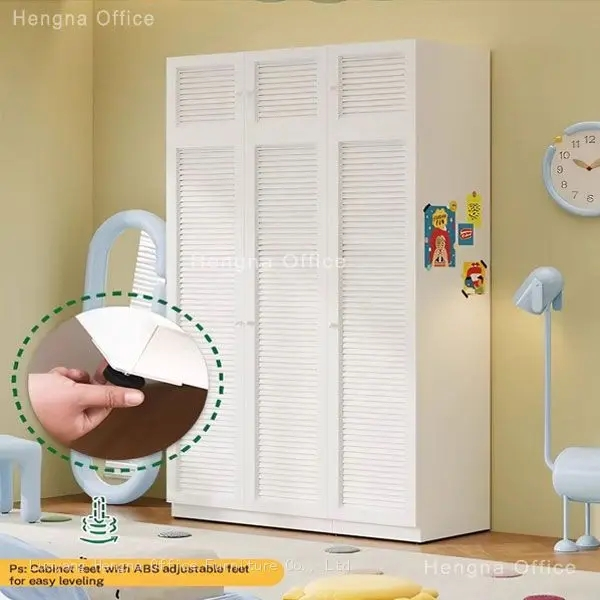
- Level adjustment using adjustable feet
- Door re-alignment after transport
- Electrical re-testing on site
Factory quality and installation quality should work together.
Common Mistakes I See New Buyers Make
- Focusing only on glass thickness
- Ignoring steel structure and weld quality
- Assuming “tempered glass” without certification is enough
- Not asking for load test standards
- Treating QC as only the factory’s responsibility
Final Thoughts from Industry Experience
From my perspective, quality is not a single inspection point—it is a system.
A reliable display cabinet is the result of many disciplined checks, each preventing a specific failure.
For new buyers, learning how QC works is often more valuable than comparing prices.